


Exercise Physiologist vs Personal Trainer
A sore back that has lingered for months, a recent knee operation, diabetes, persistent pain or a return to sport after injury can make choosing the right exercise support feel less straightforward than it should. When comparing an exercise physiologist vs personal trainer, the key difference is not who can make you work harder. It is who is best placed to assess your health needs, manage risk and build an exercise plan around your specific goal.
Both professionals can play a valuable role in helping you move more, feel stronger and build confidence. The right choice depends on your medical history, current symptoms, rehabilitation needs and the level of clinical support required.
Exercise physiologist vs personal trainer: the key difference
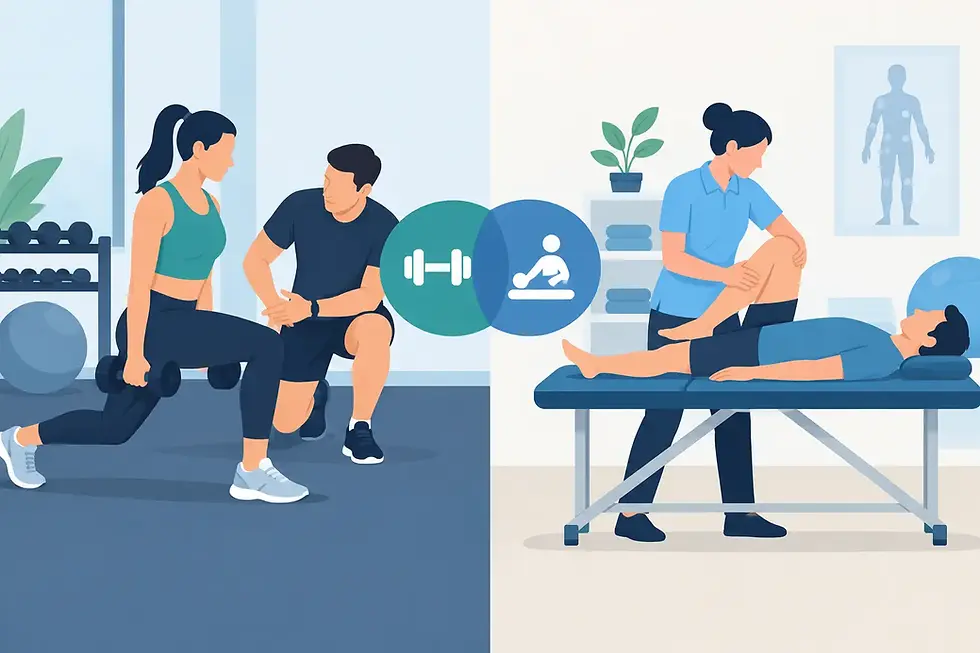
An accredited exercise physiologist is an allied health professional who uses exercise as clinical treatment. They are university-qualified and trained to assess, prescribe and deliver exercise for people living with injuries, chronic health conditions, disability or complex health needs.
A personal trainer focuses on improving general fitness, strength, body composition, exercise technique and motivation. Many personal trainers hold Certificate III and IV qualifications in Fitness and can provide excellent support for people who are generally well, medically cleared to exercise and looking for structured training.
The distinction matters because an exercise physiologist works within a clinical framework. They consider your diagnosis, medications, symptoms, functional limitations, medical advice and broader treatment plan before prescribing exercise. A personal trainer may adapt training to your goals and fitness level, but they do not replace clinical assessment or rehabilitation care when an injury or health condition is involved.
What an exercise physiologist can help with
Exercise physiology is not simply supervised gym training. It is evidence-based care designed to improve function, reduce symptoms and support long-term health through the right type and dose of movement.
Your initial appointment may include a detailed health history, discussion of your goals, movement and strength testing, review of pain or fatigue patterns, and consideration of any reports or referrals from your GP, specialist or other treating practitioner. From there, your exercise physiologist develops a personalised treatment plan with realistic progress markers.
This can be particularly helpful for people managing persistent pain, arthritis, osteoporosis, diabetes, heart or respiratory conditions, neurological conditions, cancer recovery, obesity, falls risk, workplace injuries or rehabilitation after surgery. Exercise physiologists also support NDIS participants and older Australians seeking to maintain mobility, independence and confidence in daily activities.
For example, someone recovering from a shoulder operation may need carefully staged strengthening that protects healing tissues while restoring movement. Someone with type 2 diabetes may need an exercise plan that considers blood glucose management, fatigue, joint health and sustainable habits. In these situations, more exercise is not automatically better. The exercise needs to be appropriate for the person in front of you.
Rehabilitation is about function, not just fitness
A well-designed rehabilitation program connects exercise to what you need or want to do in everyday life. That might mean lifting a child, getting in and out of the car comfortably, returning to work, walking around the shops, using stairs without fear or preparing for sport.
An exercise physiologist can progress your program as your capacity changes, modifying exercises when pain, flare-ups, fatigue or changing medical needs affect your tolerance. They can also communicate with other members of your care team where needed, helping ensure your rehabilitation is coordinated rather than fragmented.
What a personal trainer can help with
A personal trainer can be an excellent choice when your primary goal is general fitness and you do not require clinical management. They can provide structure, accountability and encouragement, which are often the difference between intending to exercise and building a routine that lasts.
Personal training may suit you if you want to learn gym equipment safely, improve lifting technique, build strength, train for a recreational event, increase cardiovascular fitness or maintain momentum once you have completed rehabilitation. A skilled trainer can make sessions engaging and help you progressively challenge yourself.
Trainer qualifications, experience and areas of interest vary. If you have a past injury or health condition that is stable, be open about it before starting. A good personal trainer will work within their scope, adjust your program appropriately and refer you to an allied health professional if pain, symptoms or safety concerns arise.
When should you see an exercise physiologist first?
Seeing an exercise physiologist first is usually the more appropriate option when exercise needs to be part of treatment, rather than simply part of a fitness routine. This includes new or worsening pain, an injury that is affecting work or daily life, recent surgery, a diagnosed chronic condition, significant balance issues, or uncertainty about what movements are safe.
It is also a sensible starting point if you have stopped exercising because you are worried about aggravating something. Avoidance can reduce strength and confidence over time, but pushing through without the right guidance can prolong symptoms. A clinical assessment helps identify a safe starting point and gives you a clear pathway forward.
You do not need to be an athlete, already fit or comfortable in a gym to benefit. Exercise physiology is often most valuable when someone feels deconditioned, overwhelmed or unsure where to begin.
Can you work with both?
Yes. For many people, the best answer is not exercise physiologist or personal trainer. It is the right support at the right stage.
You may begin with an exercise physiologist to assess an injury, establish safe movement patterns and complete a rehabilitation plan. Once your symptoms are settled and you have been cleared to progress, a personal trainer can help maintain consistency and build fitness around that foundation. Some people continue seeing an exercise physiologist periodically while training independently or with a trainer.
Clear communication is essential. Your program should not contain competing advice or progress too quickly because different providers are working from different information. Sharing relevant recommendations, restrictions and goals helps keep everyone focused on the same outcome.
At Allied Health Co, this coordination can be particularly useful when exercise rehabilitation sits alongside physiotherapy, chiropractic care, podiatry, occupational therapy or other support. Your care should make sense as one plan, not feel like a series of disconnected appointments.
Qualifications, referrals and funding considerations
An accredited exercise physiologist has completed university study in exercise physiology and meets professional accreditation requirements. They are qualified to work with people across a wide range of health conditions and can provide clinical exercise interventions.
Personal trainers generally hold vocational fitness qualifications, commonly Certificate III and IV in Fitness. These qualifications are valuable for fitness coaching, but they are not the same as an allied health degree. If you are comparing providers, ask about their experience with your specific concern, how they screen for risk and when they would refer to another practitioner.
You can often book an exercise physiology appointment without a referral. However, a referral from your GP, surgeon, specialist or another health professional can provide useful clinical information and may be required for certain funding pathways. Depending on your circumstances and eligibility, exercise physiology services may be supported through Medicare care plans, NDIS, WorkCover, CTP, DVA, My Aged Care or private health cover. Confirming the details before your appointment can prevent surprises and help you plan your care.
How to choose the right support for your goal
Start with an honest assessment of what is holding you back. If your main barrier is motivation, routine or a desire to improve general fitness, a personal trainer may be exactly what you need. If pain, injury, surgery, disability, chronic illness or uncertainty is part of the picture, an exercise physiologist offers the clinical assessment and personalised progression that can make movement feel safer and more achievable.
The most useful program is not the hardest one or the most complicated one. It is the one that matches your body, your health needs and your real life - then helps you keep moving forward with confidence.


Comments