


Why Knees Buckle: Common Causes and Next Steps
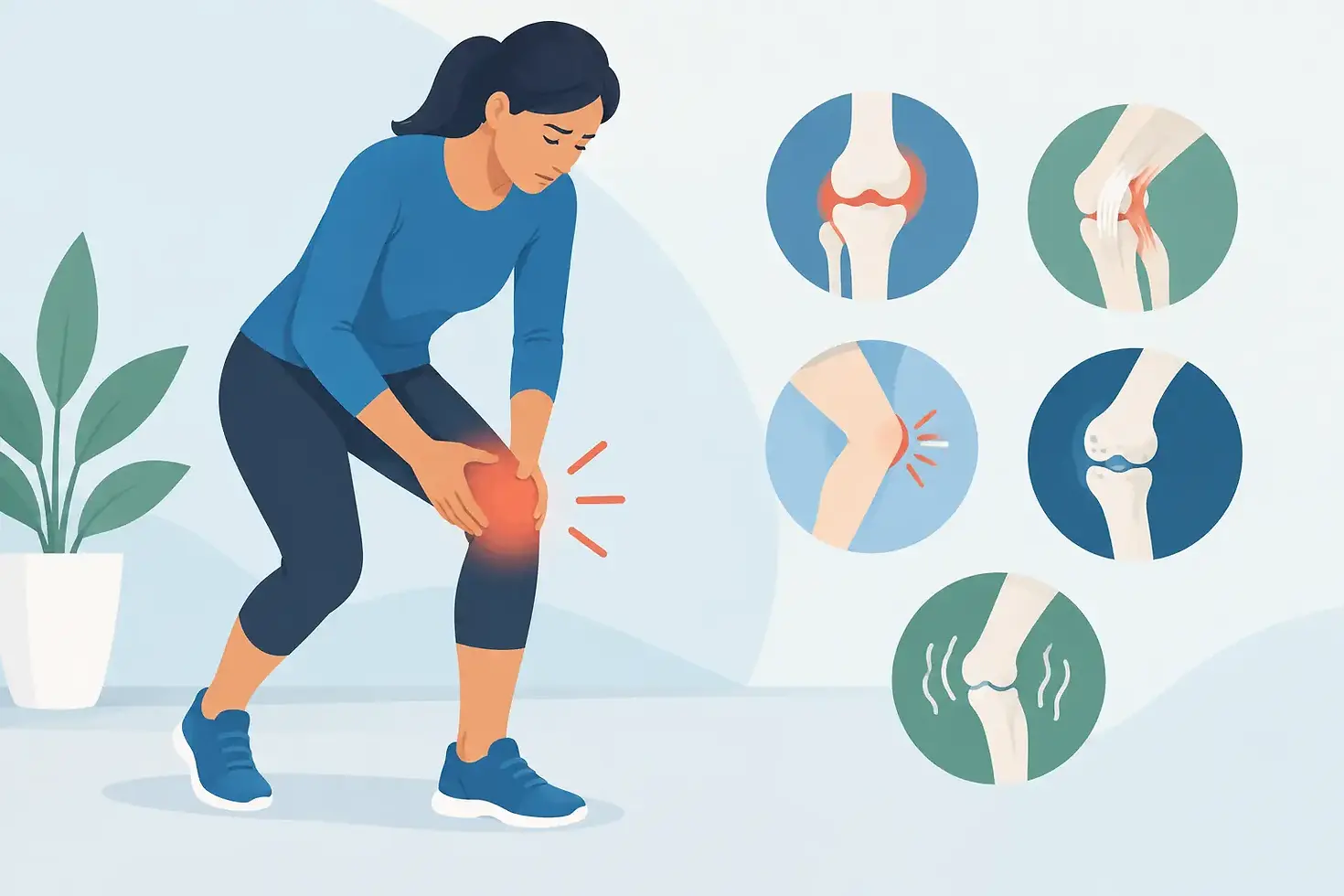
A knee giving way halfway down the stairs, during a walk or when stepping off a kerb can be unsettling. Understanding why knees buckle starts with one key point: buckling is a symptom, not a diagnosis. It may reflect a temporary loss of muscle control, pain-related inhibition, joint instability or, less commonly, a nerve or neurological concern.
One isolated episode after an awkward movement may settle quickly. Repeated buckling, however, deserves a proper assessment - particularly if it is causing falls, stopping you from working, playing sport or moving confidently around home.
What does it mean when a knee buckles?
People use “buckling” to describe slightly different experiences. For some, the knee suddenly feels weak and bends underneath them. Others feel as though it slips, shifts or cannot hold their body weight. A sharp pain may trigger the sensation, or it may happen without much pain at all.
The knee relies on more than bones and ligaments to stay steady. The quadriceps at the front of the thigh, hamstrings, gluteal muscles, calf muscles, ligaments, menisci and the nervous system all contribute to control. If one part is injured, irritated or not working efficiently, the knee can feel unreliable.
Why knees buckle: common causes
Pain and muscle inhibition
Pain inside or around the knee can cause the quadriceps to switch off momentarily. This is a protective response from the nervous system, but it can make the leg feel as if it will not support you. It is common after a flare of knee osteoarthritis, a kneecap problem, a minor twist or an overuse injury.
Swelling can contribute as well. Even a relatively small amount of fluid in the joint may affect how effectively the quadriceps contracts. The result can be a knee that feels weak, hesitant or unpredictable when standing from a chair, going downstairs or changing direction.
Weakness or reduced movement control
Muscle weakness does not always mean a person is inactive. It can develop after surgery, a period in a boot or brace, reduced activity due to pain, illness, or simply favouring one side for too long. Weakness in the quadriceps and hip muscles can make it harder to control the knee as it bends under load.
Reduced balance and body awareness can play a role too. This is especially relevant for older adults, people returning to activity after injury and those with neurological conditions. A personalised exercise program can address strength, balance and confidence together rather than focusing on the knee in isolation.
Ligament, meniscus or kneecap injuries
A twisting injury followed by swelling, pain and a feeling that the knee is giving way may indicate damage to structures that stabilise the joint. The anterior cruciate ligament, or ACL, is well known for causing instability after a pivoting injury, particularly in sports involving sudden changes of direction. Other ligaments may be affected after a direct blow or awkward landing.
A meniscus tear can also cause pain, catching, locking or a sense that the knee is not moving smoothly. In some cases, a piece of tissue can interfere with normal movement. Kneecap instability is another possible cause, particularly where the kneecap feels as though it has shifted out of place or moves sideways with a pop.
Not every knee injury needs surgery. The right approach depends on the structure involved, the degree of instability, your age, work demands, sport, goals and response to rehabilitation. Early assessment helps clarify the most suitable next step.
Arthritis and joint changes
Knee osteoarthritis can lead to pain, stiffness, swelling and reduced confidence in the joint. Some people describe a sudden “giving way” during a painful step. This does not necessarily mean the knee is structurally collapsing. Often, pain, reduced strength and altered movement patterns are combining to create the sensation.
Evidence-based management may include targeted exercise, hands-on treatment where appropriate, activity modification, education and strategies to manage flare-ups. The goal is not simply to avoid movement. It is to restore safe, useful movement in a way that suits your life.
Nerve or neurological causes
Sometimes the problem is not primarily within the knee. Nerve irritation or compression in the lower back, hip or leg can affect muscle strength and sensation around the knee. Peripheral neuropathy, neurological conditions and some medications can also contribute to unsteadiness.
If buckling is accompanied by numbness, tingling, new foot weakness, back pain that travels down the leg or changes in balance, a clinician should consider the wider picture. A thorough assessment can help determine whether physiotherapy, medical review or coordinated care with other health professionals is needed.
When should knee buckling be assessed urgently?
Seek urgent medical attention if the knee gives way after a significant injury and you cannot bear weight, the joint looks deformed, or there is rapid and substantial swelling. Prompt assessment is also needed for a hot, red, severely painful knee, particularly if you feel unwell or have a fever.
Call emergency services if knee weakness occurs suddenly alongside facial drooping, difficulty speaking, severe dizziness, confusion or weakness in an arm or one side of the body. These symptoms may indicate a medical emergency rather than a local knee issue.
For non-emergency concerns, book an assessment soon if buckling is recurring, you have fallen, the knee locks, or it is limiting work, sport, school runs or everyday mobility. Waiting can lead to further falls, loss of strength and a growing fear of movement.
What to do after your knee gives way
In the short term, reduce activities that repeatedly trigger buckling. Avoid testing the knee through sharp pivots, deep squats, uneven ground or stairs if these movements feel unsafe. If there is a fresh injury with swelling, protecting the knee and using a cold pack wrapped in a cloth for short periods may ease symptoms.
Do not push through a knee that repeatedly collapses. At the same time, complete rest for long periods can worsen stiffness and weakness. The balance is to keep moving within comfortable, safe limits while arranging assessment. A walking aid or brace may be helpful for some people, but it should be selected for the specific problem rather than used as a one-size-fits-all solution.
Make a note of what was happening when the knee buckled. Was there a twist, a pop, swelling, pain at the front or inside of the knee, or numbness down the leg? These details help guide a clinical assessment.
How a personalised rehabilitation plan can help
A quality assessment looks beyond the painful spot. It considers your walking pattern, knee range of motion, strength, balance, hip and ankle function, previous injuries, work duties, sport and personal goals. Imaging is sometimes useful, but it is not always the first or only answer. Clinical findings and how the knee functions day to day matter just as much.
Rehabilitation commonly focuses on rebuilding quadriceps and hip strength, improving balance and practising the movements that matter to you - whether that is getting in and out of a car, managing stairs, returning to a physical job or changing direction on the field. Progression should be measured and purposeful. Too little load may not restore capacity; too much, too soon can aggravate symptoms.
At Allied Health Co, physiotherapists and exercise professionals can work together to develop an evidence-based treatment plan that supports safe recovery. Where pain, foot mechanics, workplace demands, post-surgical needs or broader health concerns are involved, coordinated multidisciplinary care can reduce the need to manage multiple disconnected appointments.
A buckling knee can make everyday movement feel uncertain, but it does not have to dictate what you can do. With an accurate assessment and a plan built around your body and goals, you can take practical steps towards steadier, more confident movement.


Comments